
Arc Flash Hazards: What Every Facility Needs to Know
Electrical systems are the backbone of modern industrial and commercial facilities—but they also present one of the most severe safety risks: the arc flash.

An arc flash is a sudden release of electrical energy through the air when a fault occurs between phase to phase or phase to ground. These events can reach temperatures of up to 35,000°F, producing intense heat, pressure waves, and molten metal that can cause catastrophic injury, equipment damage, and unplanned downtime.
For facility managers, maintenance teams, and thermographers, understanding arc flash risk is not optional—it is essential.
What Causes an Arc Flash?
Arc flashes typically occur when electrical systems degrade or are improperly maintained. Common contributing factors include:
- Loose or deteriorated electrical connections
- Insulation breakdown
- Contamination (dust, moisture, corrosion)
- Equipment aging and wear
- Improper work practices or human error
These conditions create opportunities for unintended current paths—resulting in an arc event.
Why Arc Flash Matters for Safety?
Arc flash incidents are not just equipment failures—they are life-threatening events.
Risks to Personnel
- Severe burns (often third-degree or worse)
- Blast injuries from pressure waves
- Hearing and vision damage
- Fatalities in extreme cases
Risks to Operations
- Unplanned downtime
- Equipment destruction
- Costly emergency repairs
- Regulatory and insurance implications
For decision-makers, the cost of prevention is negligible compared to the cost of failure.
The Role of Thermal Inspections in Arc Flash Prevention
Infrared thermography is one of the most effective non-invasive tools for identifying electrical issues before they escalate into arc flash events.
Thermal inspections allow trained professionals to detect abnormal heat signatures that indicate:
- High resistance connections
- Overloaded circuits
- Imbalanced electrical loads
- Failing components
By identifying these issues early, corrective action can be taken before a fault condition develops.
What to Look for During an Inspection?
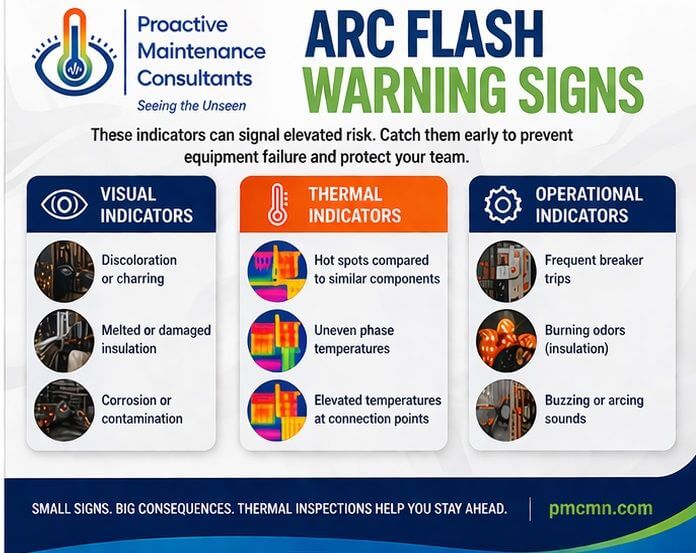
When on-site—whether as a thermographer or facility representative—there are key indicators that signal elevated risk:
Visual Indicators
- Discoloration or charring of components
- Melted insulation or deformation
- Corrosion or contamination inside panels
Thermal Indicators
- Hot spots relative to similar components
- Uneven phase temperatures
- Elevated temperatures at connection points
Operational Indicators
- Frequent breaker trips
- Unusual odors (burning insulation)
- Audible buzzing or arcing sounds
These signs often precede failure—and should never be ignored.
Thermographer Safety: A Critical Priority
Thermal inspections must always be performed with safety as the primary consideration.
Key practices include:
- Adhering to established arc flash boundaries
- Wearing appropriate PPE based on incident energy levels
- Using proper inspection techniques to minimize exposure
- Understanding that infrared cameras do not see through standard glass or most plastics—requiring panel access in many cases
Proper training and certification are essential. Thermography is not “point and shoot”—it requires informed analysis and risk awareness.
Why Proactive Maintenance Matters
Arc flash prevention is not a one-time effort—it is part of a comprehensive reliability strategy.
Facilities that implement routine thermal inspections benefit from:
- Reduced risk of catastrophic electrical events
- Improved system reliability and uptime
- Extended equipment life cycles
- Enhanced workplace safety
Ultimately, proactive maintenance shifts the approach from reactive repairs to predictive risk management.
Closing Perspective
Electrical systems will always carry inherent risk—but arc flash incidents are largely preventable.
With proper inspection protocols, trained personnel, and a commitment to proactive maintenance, facilities can significantly reduce hazards while improving operational performance.
At Proactive Maintenance Consultants (PMC), we focus on identifying risks before they become failures—helping protect both people and assets.

